29 January 23
Live on the homepage now!
Reader Supported News
WILL RSN HAVE A BUDGET TO CONTINUE ITS WORK? When an organization does not have a corporate sugar daddy, or mommy every fund-raising drive is the one the determines what the budget will be going forward. That's bad because we always stay hungry, but it's good because we always stay hungry. The logic of that is stark and unavoidable. Truth: We love it this way. Be a Reader Supporter, it feels great! Thank you all in advance.
Marc Ash • Founder, Reader Supported News
Sure, I'll make a donation!
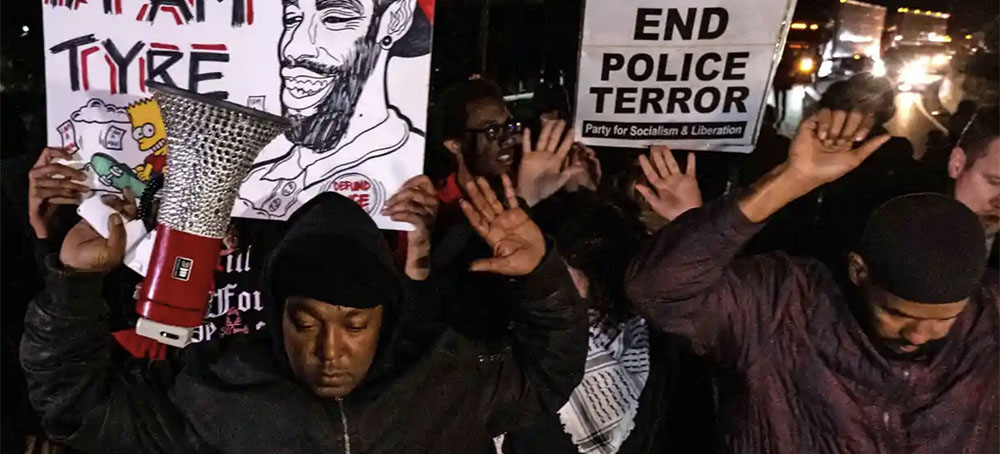
'We're Tired of Being Beaten': Protesters Across US Call for Justice for Tyre Nichols
Gloria Oladipo, Guardian UK
Oladipo writes: "Protests were taking place in multiple US cities after police released footage of Tyre Nichols' fatal beating at the hands of Memphis police."
After video of the brutal beating was released, people gathered to decry the violence and abuse of power
Protests were taking place in multiple US cities after police released footage of Tyre Nichols’ fatal beating at the hands of Memphis police.
The video released late Friday shows several Memphis officers kicking Nichols repeatedly in the head, punching him in the face, and hitting him with a baton.
Officers and medical personnel failed to intervene after the attacks left Nichols unable to sit upright. Five of the involved officers have been fired and charged with second-degree murder.
The protests remained largely peaceful throughout the night on Friday, and there were more protests taking place on Saturday and planned for the coming days.
Protestors in Memphis, where the fatal beating took place, poured onto Interstate 55, a highway that connects Tennessee and Arkansas, on Friday night to express their outrage at the video and ongoing excessive force used by Memphis police.
Nyliayh Stewart, 24, joined protestors and discussed the killing of her cousin by a white Memphis police officer during a traffic stop.
“This should not have happened,” said Stewart. “This family should not have to bury him. My family should not have had to bury my cousin.”
In New York, dozens of protestors gathered in Times Square after the video’s release, decrying the brutal beating and police brutality at large. “What’s his name? Tyre! Say his name. Tyre!” the demonstrators chanted while holding up signs.
At least one person was arrested for allegedly attempting to smash a police car’s windshield. Two more were arrested during the demonstrations, but official charges are still pending, according to a report from ABC News 7.
Demonstrators also met in the city’s Union Square and Grand Central terminal, which police limited access to given the expected protests.
Several smaller groups in Chicago hosted rallies and vigils in response to the brutal video, the Chicago Tribune reported.
Groups of 10 to 20 people held peaceful demonstrations in front of the Chicago police department headquarters in the Bronzeville neighborhood and in several other communities. “We’re tired of being murdered, tired of being beaten, tired of being chased,” said Rabbi Michael Ben Yosef, who joined demonstrators in front of the department headquarters, according to ABC 7 Chicago.
Nearly 100 people rallied in Washington DC’s Lafayette Square in response to the video.
Dozens of protestors also marched in Philadelphia’s Center City, as organizers spoke out against the video and police violence.
“It’s absolutely disgusting,” said Talia Giles, an organizer with the Party for Socialism and Liberation, during a speech at Friday’s demonstration.
“It shows the complete and utter disregard for human life. It shows the fact that police, no matter what their race is, are going to terrorize people because that’s what the system is meant to do. It’s meant to abuse its power against citizens.”
About 100 people gathered outside the Los Angeles police department headquarters to protest following the released footage.
The protest was borne out of a candlelight vigil that was taking place, where attendees burned sage and played audio from the video clips of officers fatally beating Nichols, reported the Los Angeles Times.
In Portland, more than 100 protesters gathered to decry the video and the routine pattern of police brutality against Black people.
“Why did it happen again? why is it still happening? why is it happening again? why is it happening now?” said a protestor, according to KGW8.
Protesters marched in Atlanta on Saturday following a night of protests shortly after the released video.
Despite peaceful protests, Republican governor Brian Kemp declared a state of emergency on Thursday and authorized the deployment of as many as 1,000 National Guard troops in light of the released video.
The declaration also came following protests in Atlanta over a controversial police training center that would bulldoze one of the city’s largest green spaces.
Organizers in Newark, New Jersey held a rally and march at 12.00pm to condemn the beating of Nichols.
“The message that we want to get out is that police brutality must stop. This problem continues to grow,” said Lawrence Hamm, chairman of People’s Organization for Progress, to News 12 New Jersey.
Activists also gathered to protest the decision of a grand jury this week to not indict a Newark police officer who fatally shot Carl Dorsey, a Black man.
New York organizers planned additional protests throughout Saturday.
Street Riders NYC, an activist group, held a bike ride in light of the release video.
A march demanding justice for Nichols has also been planned for 5.00pm in New York’s Washington Square park.
Civil rights leaders have spoken about the footage, calling out repeated instances of police brutality against Black people.
In a statement shared Saturday, Reverend Al Sharpton spoke about yet another example of police brutality against a Black man.
“Once again, we are forced to watch another horrific video of cops using brutal force to kill a Black man,” said Sharpton, who will be speaking at a rally on Saturday.
“Nearly three years after the murder of George Floyd shook the world, here we are.”
READ MORE
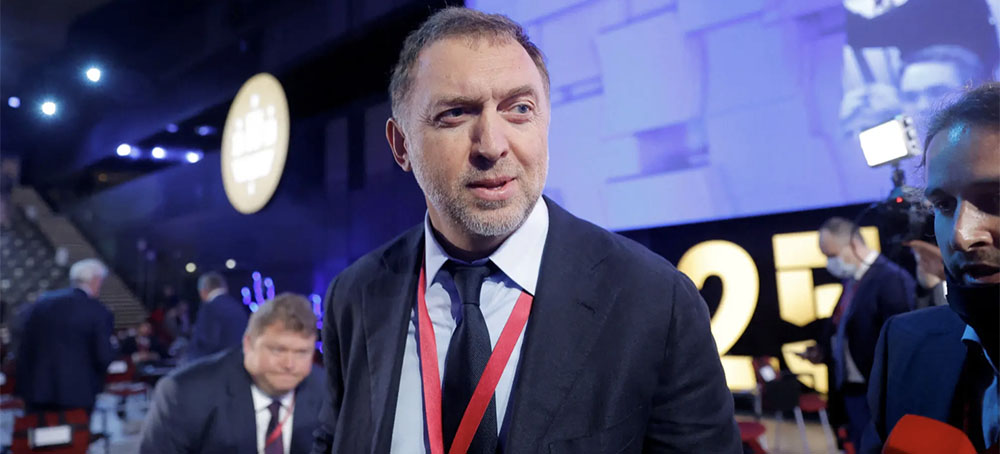 The Russian billionaire Oleg Deripaska has employed a small army of lobbyists, lawyers, consultants, and fixers to protect his business and personal interests. (photo: Maxim Shemetov/Reuters)
How an Oligarch May Have Recruited the FBI Agent Who Investigated Him
Rebecca Davis O’Brien, The New York Times
O’Brien writes: "The Federal Bureau of Investigation tried to recruit Oleg V. Deripaska, a Russian billionaire, as an informant around 2014, hoping he might shed light on organized crime and, later, possible interference in the presidential election."
The bureau tried to court Oleg Deripaska, a Russian aluminum magnate, as an informant. Instead, one of its own top agents may have ended up working for him.
The Federal Bureau of Investigation tried to recruit Oleg V. Deripaska, a Russian billionaire, as an informant around 2014, hoping he might shed light on organized crime and, later, possible interference in the presidential election.
A decade later, Mr. Deripaska may have turned the tables on the F.B.I.: Prosecutors say the oligarch recruited one of the bureau’s top spy catchers, just as he entered retirement, to carry out work that they say violated U.S. sanctions.
The charges unsealed this week against Charles McGonigal — who ran the counterintelligence unit at the bureau’s New York field office and investigated Russian oligarchs, including Mr. Deripaska, according to the indictment — showed the extent of the oligarch’s reach into the highest levels of U.S. power.
There is no indication in the Manhattan indictment that Mr. McGonigal was working for Mr. Deripaska while still employed by the F.B.I. Still, the case — and a parallel indictment in Washington that charged Mr. McGonigal with receiving at least $225,000 in secret payments from a former employee of an Albanian intelligence service while still at the agency — has raised questions about how compromised he may have been.
Mr. Deripaska, an aluminum magnate, had been on the radar of U.S. authorities for years and remains under sanctions. He was known to be an ally of Russian President Vladimir V. Putin. The Treasury Department had reported that he had ties to organized crime.
“Deripaska is a well-known man to anybody who follows Russia,” said Daniel Fried, a former U.S. ambassador to Poland and a former State Department official who helped craft sanctions against Russia. “I wouldn’t have accepted a luncheon invitation from the guy,” he added.
The implications of the allegations against Mr. McGonigal are alarming, Mr. Fried said. “In a broader sense, it does seem to suggest that the corrupting influence of the Russian oligarchs, the money, is real.”
In a statement, a spokeswoman for Mr. Deripaska, Larisa Belyaeva, said that he did not hire Mr. McGonigal for any purpose and that he had never been close to Mr. Putin. A lawyer for Mr. McGonigal declined to comment.
For years, Mr. Deripaska, 55, has employed a small army of lobbyists, lawyers, consultants and fixers to protect his business and personal interests and smooth his access to Western countries.
In recent months, though, federal prosecutors in New York have charged several of those representatives in indictments that accuse them of a range of sanctions violations.
Mr. Deripaska was himself indicted last fall, with authorities saying he schemed to have his girlfriend give birth to their child in the United States. At the time, American authorities said he had not been arrested and was considered a fugitive.
Mr. Deripaska became rich by prevailing over rivals and partners in the 1990s, when well-connected Russians competed for control over state resources in the wake of the Soviet Union’s collapse. He earned a reputation for being ruthless and litigious.
He also made connections to powerful figures, particularly in Britain. He spent years trying to buy respect and credibility in the United States, London and elsewhere — hosting parties at the World Economic Forum in Davos, Switzerland, hiring former senior U.S. officials as lobbyists and courting powerful British political figures.
He had worked in the past with the U.S. government, including on a failed effort to rescue an F.B.I. agent who had been captured in Iran, for which Mr. Deripaska spent as much as $25 million of his own money.
Still, successive administrations in Washington sought to limit his ability to travel to the United States, despite personal intercessions from Mr. Putin. The F.B.I. searched multimillion-dollar homes linked to Mr. Deripaska in 2021 as part of the investigation into whether he had violated the sanctions imposed on him.
Mr. Deripaska came to broader public attention in the United States around the 2016 election, because he had employed Paul Manafort, Donald Trump’s onetime campaign chairman, as an adviser.
From roughly 2014 to 2016, the F.B.I. tried to court Mr. Deripaska as a potential informant, seeking information on Russian organized crime and on possible Russian aid to Mr. Trump’s campaign, The New York Times reported in 2018. At one point, The Times reported, agents appeared at Mr. Deripaska’s home in New York and pressed him about Mr. Manafort and whether he had served as a link between the Trump campaign and the Kremlin. (He told them the theory was “preposterous.”)
According to the indictment, in 2018, Mr. McGonigal reviewed a “then-classified list of oligarchs with close ties to the Kremlin” who were being considered for sanctions.
“Since at least 2016, Russia has been a central counterintelligence focus of the F.B.I. and U.S. government,” said Brandon L. Van Grack, a lawyer in private practice who was a prosecutor for Robert S. Mueller III’s investigation of Russia’s efforts to interfere in the 2016 presidential election. “This former agent was as acutely aware of that concern as anyone at the F.B.I.”
In April 2018, the Trump administration announced sanctions on seven oligarchs and companies they owned or controlled as punishment for Russia’s interference in the 2016 election, the 2014 annexation of Crimea and other acts.
Mr. Deripaska and his company, Rusal, were among them. In its announcement of the sanctions, U.S. Treasury officials cited Mr. Deripaska’s connections to a senior Russian official and his work in Russia’s energy sector. The authorities said he had been investigated for money laundering and had been accused of threatening business rivals, illegally wiretapping a government official and taking part in extortion and racketeering. They also cited allegations that Mr. Deripaska had bribed a government official, ordered the murder of a businessman and had links to Russian organized crime.
Mr. Deripaska denied the allegations, which his allies have said were punishment for refusing to cooperate with U.S. authorities. (In 2019, the Trump administration lifted sanctions against Mr. Deripaska’s companies under an agreement intended to reduce his control and ownership, though a confidential document showed the deal may have been less punitive than advertised.)
For Mr. Deripaska, the sanctions represented not just an existential threat to his business, but a rejection of the cosmopolitan power broker image he had long sought to project in the West.
Mr. Deripaska fought back, seeking to undo the sanctions or lessen their potentially lethal effect on his businesses. The Times reported in late 2018 that a secret lobbying effort by his team of lawyers, consultants, bankers and well-connected allies had made “substantial headway,” including winning postponements on the sanctions.
“One of the risks and hazards of sanctioning wealthy people is they are better positioned to fight back,” said Carlton Greene, a sanctions and international money laundering expert.
It is not clear from the indictment how Mr. McGonigal got onto Mr. Deripaska’s radar.
According to the indictment against Mr. McGonigal, while he was still working for the bureau in 2018, Sergey Shestakov — a former Soviet and Russian diplomat and translator who was also charged in the case — introduced Mr. McGonigal by email to an employee of Mr. Deripaska. That person was identified in the charges as Agent-1 and described as a former Soviet and Russian Federation diplomat.
Mr. Shestakov asked Mr. McGonigal to help Agent-1’s daughter, a college student, get an internship with the New York Police Department in counterterrorism, intelligence gathering or “international liaisoning,” according to the indictment. Mr. McGonigal told an F.B.I. subordinate that he wanted to recruit Agent-1, whom he described as a Russian intelligence officer, the indictment says.
The indictment says Mr. McGonigal agreed to help the daughter, and with help from a contact at the Police Department he secured a meeting for her with a police sergeant.
In 2019, after his retirement, Mr. McGonigal introduced Mr. Deripaska’s agent to an international law firm in Manhattan to help Mr. Deripaska have the sanctions removed, according to the indictment. During the negotiations, McGonigal met with Mr. Deripaska in London and Vienna, prosecutors said. When Mr. Deripaska signed with the firm, it brought on Mr. McGonigal as a consultant and investigator.
In the spring of 2021, Agent-1 began negotiating with Mr. McGonigal to work directly for Mr. Deripaska, without the law firm. He wanted Mr. McGonigal to investigate a business rival, according to the indictment.
Between August and November 2021, prosecutors say, Mr. Deripaska made payments to Mr. Shestakov and Mr. McGonigal from a Russian bank through accounts in Cyprus and New Jersey. In October of that year, F.B.I. agents searched homes linked to Mr. Deripaska in New York City and Washington.
On Nov. 21, 2021, F.B.I. agents seized Mr. Shestakov’s and Mr. McGonigal’s electronic devices.
READ MORE
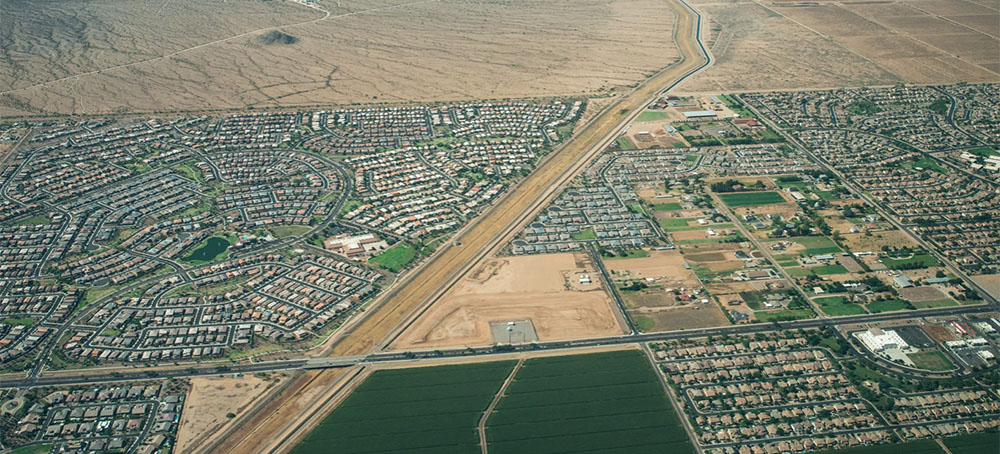 The Southwest's protracted drought has put a strain on an already arid environment. (photo: Wild Horizon/Getty Images)
Rachel Monroe | How Native Americans Will Shape the Future of Water in the West
Rachel Monroe, The New Yorker
Tribal nations hold the rights to significant portions of the Colorado River. In the increasing drought, some are showing the way to sustainability.
As a child, Stephen Lewis heard stories about a river that, for the most part, no longer flowed. “How I grew up was that it was a theft, that it was stolen from us,” he told me late last year. “There was what we used to call the Mighty Gila River, and now it was just pretty much dry. There was no water.”
Lewis is the governor of the Gila River Indian Community (GRIC), a group that has occupied land south of Phoenix for centuries. When I met him, in the dining room of the Whirlwind Golf Club, which the tribe owns, Lewis had recently returned from Santa Fe. There, he’d attended a celebration marking the centennial of the Colorado River Compact, an agreement that continues to shape water politics in the Southwest. In Santa Fe, Lewis took note of a black-and-white photograph of the compact’s signers—white men in dark jackets, gathered around a wooden desk.
In the United States, water law is founded on the principle of “first in time, first in right”—whoever first put water to “beneficial use” can claim the right to use it now and in the future. In the 1922 compact, though, tribal nations are mentioned only in passing. “The Colorado River Compact basically just assumed that tribes were going to go away, the United States was going to figure it out, nobody had to care,” Jay Weiner, a tribal attorney from Montana, told me. Instead, in recent years, as the worst drought in more than a thousand years has seized the Southwest, the region’s tribal nations have been asserting their legal rights to the contentious, increasingly scarce commodity of water. In 2004, GRIC signed an agreement with the federal government that gave them the right to more than six hundred and fifty thousand acre-feet of water, much of it from the Colorado River. The settlement made GRIC one of the largest rights holders of Colorado River water in Arizona; the community controls more of the river’s water than the state of Nevada. Tribal nations could soon hold the legal right to about twenty per cent of the Colorado River’s flow, including unresolved claims. (Some Southwestern tribes have yet to come to an official agreement over their water entitlements.)
“What used to happen is that the powers that be would get together and figure out what to do, and then tell everyone else what the plan was,” Lewis said. “And what’s changed is that you just can’t do that anymore. Those days are over.”
Lewis’s father, Rod, studied medieval history in graduate school, where he expressed his arch sense of humor, and his pride in his heritage, through his school assignments. “He’d write, like, ‘While in England they were living in houses insulated with excrement and running around, painting their faces blue and purple, the Hohokam were building sophisticated canal water-delivery systems,’ ” Lewis recalled, laughing.
In the nineteenth century, the Akimel O’otham, a tribe of Hohokam descendants that the Spanish called the Pima, lived among cottonwoods and willows along the banks of the Gila, a tributary of the Colorado that flows through New Mexico and Arizona. The river was central to their economic and spiritual life. The Pima directed the water’s flow through a system of ditches and culverts, and developed an extensive agricultural system, growing watermelons, beans, corn, squash, cotton, and tobacco.
Westward-bound migrants passing through the Sonoran Desert—gold-rushers, Mormon settlers, surveyors, military scouts, trappers—came to rely on the Pima lands as a crucial provisioning stop on the arduous journey, the historian David DeJong writes, in “Stealing the Gila: The Pima Agricultural Economy and Water Deprivation, 1848-1921.” The tribe found lost horses, allowed bony oxen teams to graze their fields, and established a robust business selling surplus crops and water. They acquired a reputation for being friendly, industrious, entrepreneurial. By the late eighteen-sixties, they were selling agricultural commodities in vast quantities: thirty thousand pounds of corn, a million pounds of wheat annually.
After the U.S. gained control of the area in the Mexican-American War, Pima leaders sought confirmation that their land rights would be respected, and were repeatedly assured that they would be. Army officers and government agents stationed in the region understood that the U.S. needed the Pima more than the other way around. “So far, they have been more blessed in giving than receiving, and have looked in vain for recognition by the government of the many kindnesses they have rendered our people,” one government official wrote. Another put it more directly: “It is necessary to do more than conciliate these Indians by presents. They must be secured in their possession of their lands.”
In 1859, Congress established the Gila River Indian Reservation, which included both the Pima and their neighbors, the Maricopa, also known as the Pee Posh. But whatever security this decision ostensibly provided was quickly undermined by federal legislation encouraging westward development, which gave settlers deeds to land as long as they irrigated and cultivated their acreage within three years. Newcomers claimed land upstream of the reservation and diverted the river for their own use. The Pima’s agricultural system, which had been carefully managed based on the tribe’s understanding of the Gila’s cyclical flows, began to falter. By the turn of the century, the Pima were irrigating only a quarter of the acreage they had forty years earlier. The community, which had been famous for its mercantile abundance, was now marked by deprivation. In 1900, a Chicago Tribune headline summed up the situation succinctly: “Indians Starving to Death.”
With the decline of their traditional staples, the community increasingly relied on provisions from the federal government: subsidized sugar, subsidized flour. In the nineteen-sixties, researchers from the National Institutes of Health came to study the community. They concluded that it had one of the highest recorded rates of Type 2 diabetes in the world.
A few years later, the American Indian Law Center established a summer pre-law program to encourage more young Native people to become attorneys. Rod Lewis was one of the program’s first students. He went on to graduate from U.C.L.A. Law School and became the first Native American attorney in Arizona. When Stephen Lewis was a child, the family took a trip to J. C. Penney to get his father a black suit. Rod had a case coming up in front of the Supreme Court. He won it, becoming the first Native attorney to argue—and to win—a case before the Court.
As a student of history, Rod Lewis was aware that water was key to his community’s self-sufficiency. In 1978, he became GRIC’s general counsel—the first tribal member to serve in that role—and turned his attention to water rights. Because of its agrarian past, the community had a strong case. By the late nineties, it had a further advantage. The city of Phoenix was sprawling south, which made GRIC’s land increasingly valuable to developers. The golf club where I met Stephen Lewis is surrounded by a luxury outlet mall, embellished with touches of Southwestern flair, and a resort complex of hotels and casinos. Because GRIC was well resourced, the tribe could afford the protracted legal wrangling that eventually led to its water settlement.
Although the settlement ostensibly gave GRIC substantial water rights, it didn’t immediately change the dynamics of water politics in Arizona. “There’s a difference between having a piece of paper that says you have water and actually being able to put that water to use,” Tom Buschatzke, the director of the Arizona Department of Water Resources, told me. “And the way Western water law developed, you can get the right to use water, but, if you don’t use it, the next person down the line can use it instead.”
A few years after the settlement, the community took steps to make use of its entire water entitlement. It invested in hundreds of miles of canals to channel about two hundred thousand acre-feet of water to the reservation—which was used mostly to irrigate crops. (GRIC is working to line these canals with solar panels, a project that’s the first of its kind in the Western Hemisphere.) They also took a further step, slogging through the complex bureaucratic and logistical process required to store the rest of their water underground. Arizona law incentivizes underground water storage, which replenishes the state’s aquifers, by allowing those who do it to sell water credits on the open market to developers and municipalities. (Arizona requires that new development has access to a hundred-year “assured water supply”; water credits can serve this purpose.) “They essentially turned their water rights into a marketable asset,” Sharon Megdal, the director of the University of Arizona’s Water Resources Research Center, said.
According to GRIC’s outside counsel, Jason Hauter, this move shook things up in Arizona: “In 2010, when we started storing our water, that upset assumptions, especially in the ag community, the home-building community”—two sectors that might have been able to use the water if GRIC hadn’t. “I think there was an assumption that, ‘Oh, they’re dumb Indians, they can’t use that water; they won’t know what to do. Well, no.’ ”
Hauter is a tall, resolute man who graduated from the same pre-law summer program as Rod Lewis. After lunch, he drove Stephen Lewis and me farther into the reservation. “We had these vast mesquite bosques,” Lewis said, looking out at the dry, flat scrubland. “But when we didn’t have water and we couldn’t farm, we had to cut down the bosques and sell the wood. That’s why you see a lot of these areas are just deforested. But we’re trying to bring the habitat back.”
The Southwest’s protracted drought has put a strain on an already arid environment. In 2007, the states that got water from the Colorado agreed to reduce their use. But, as the drought wore on for another decade and was exacerbated by climate change, it became clear that more reductions were needed to keep Lake Mead, which supplies water and hydroelectricity to millions of people, from declining to dangerously low levels. The negotiations about who would bear the brunt of those cuts were extensive and thorny. “In so many political issues, you kind of have two sides,” Buschatzke said. “In water, you have fifty sides—it’s exponentially more challenging. And, in a lot of political issues, people may have wants or needs. In water, they have legal rights.”
In 2018, Arizona formed a steering committee to come up with a plan, with delegates from GRIC and two other tribes, as well as farmers, developers, lawmakers, and environmentalists. During one meeting, Stefanie Smallhouse, the president of the Arizona Farm Bureau, made an impassioned speech on behalf of Arizona’s agricultural interests. A hundred and fifty years ago, she said, men like Jack Swilling, a prospector and a Confederate veteran, had settled in the area and begun to irrigate the desert. “There wasn’t anybody else here,” she said. “There were relics of past tribal farming, but he was pretty much the starter.”
Stephen Lewis spoke a few minutes later, managing to keep most, but not all, of the anger out of his voice. “I think we sell ourselves short when we talk about one hundred and fifty years, three hundred and fifty years,” he said. “We’ve been farming for over a thousand years.” GRIC also knew what it was like to have water taken away. “We have family stories of the devastation,” he said. “The social, medical, historical trauma that is still with us today.” Because of that history, the community saw itself as a kind of moral compass for the ongoing negotiations. “We could say, ‘We’re not going to take cuts, we’re going to fight everything, we have superior rights because of our history of water use, because of who we are,’ ” Lewis told me later. “We’re not doing that. We’re willing to sacrifice—it just has to be a shared sacrifice.”
After years of negotiations, Arizona came up with a drought contingency plan that relied, in substantial part, on GRIC’s willingness to leave two hundred thousand acre-feet of water in Lake Mead. The community was compensated about two hundred and fifty dollars an acre-foot for part of the water they left in the reservoir (they left fifty thousand acre-feet available for uncompensated conservation); if they had instead withdrawn the water and sold the credits on the open market, they would have fetched about twice as much, Hauter estimated. “There’s an opportunity cost, but having a stable system, even if it means having to sacrifice, makes sense to the community,” he said.
But the Southwest’s water woes have not been solved. Last year, the Bureau of Reclamation announced that Colorado River basin states and tribes would have to come up with an additional two to four million acre-feet of reductions to avert disaster—substantially more than they’d managed to agree to during the past two decades of tense discussions. What that plan will look like is still being worked out, but, as negotiations progressed last summer, Lewis grew worried that the community’s willingness to compromise would result in it being taken advantage of. Frustrated that more progress wasn’t being made, GRIC briefly pulled out of discussions. “We are aware that this approach will have a very significant impact on the ability of the State of Arizona to make any meaningful commitment to water reductions,” Lewis wrote in a statement, “but we cannot continue to put the interests of all others above our own when no other parties seem committed to the common goal of a cooperative basin-wide agreement.” Shortly afterward, encouraged in part by the Inflation Reduction Act, which allocated four billion dollars to improving water infrastructure, GRIC returned to the negotiating table. Still, the community’s point seems to have gotten across. “I know that they don’t want to be characterized as a source of water that will solve the state’s problems,” Buschatzke told me.
Amid all the water-wrangling and water-politicking, one of Stephen Lewis’s goals as governor was to restore part of the Gila River ecosystem; he wanted to show me the result. We walked down a dirt path edged by willows toward a thin ribbon of river, lined with cattails. It felt like another world after those miles of stark scrubland. A bird swooped low, and we were surrounded by the thrum of insects.
This restored riparian zone, which goes by the unromantic name Managed Aquifer Recharge 5, was part of GRIC’s water-storage project. Storing the water underground—that is, pumping it here and essentially allowing it to seep into the aquifer—not only supplied the community with marketable water credits, it had also radically transformed this small patch of desert. “It’s the best example I’ve seen of a fully integrated water-management plan,” Megdal, of the Water Resources Research Center, told me later. “They take care of the economy, the environment, the water management. It’s all there.”
I stood on a metal grate and tried to make sense of the system of concrete culverts, pumps, and diverters that had made this small oasis possible. The river was more infrastructure than nature—but most of them are, these days. And there’s nothing like the rich smell of water in the desert.
READ MORE
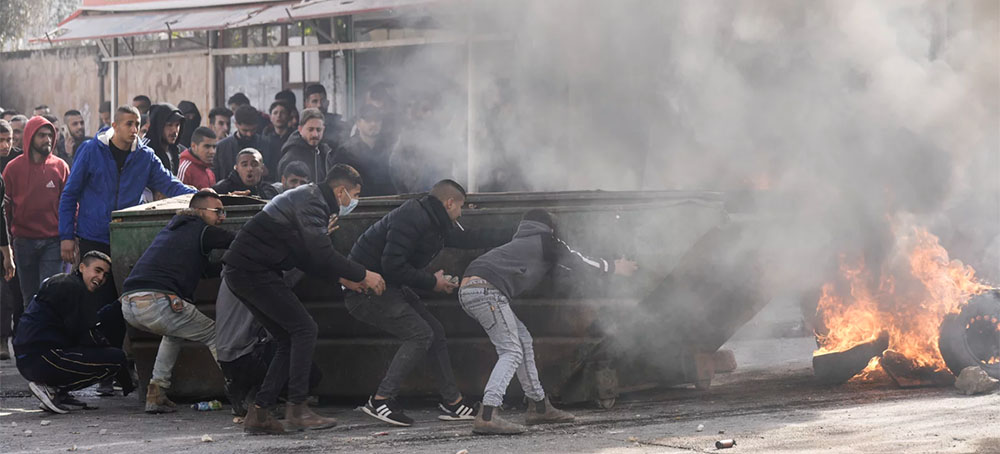 Palestinians clash with Israeli forces following an army raid in the West Bank city of Jenin on Thursday. (photo: Majdi Mohammed/AP)
Here's What Is Driving the Latest Spiral of Israeli-Palestinian Violence
Daniel Estrin and Larry Kaplow, NPR
Excerpt: "What's often summed up as the 'cycle of violence' in Jerusalem and the West Bank has suddenly surged to levels not seen in years."
READ MORE
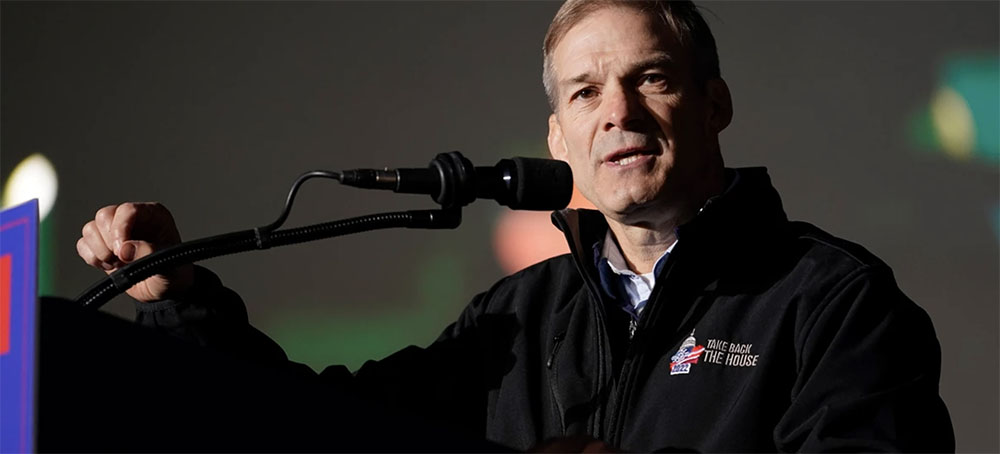 Representative Jim Jordan at a rally in support of the campaign of Ohio Senate candidate JD Vance at Wright Brothers, Aero Inc. at Dayton International Airport on November 7, 2022, in Vandalia, Ohio. (photo: Michael Conroy/AP)
Inside the GOP's Disinformation Playbook
Todd Zwillich, Vice
Zwillich writes: "Rep. Jim Jordan and House Republicans are eager to cloud the public’s understanding of Donald Trump’s evident wrongdoing at Mar-a-Lago, in the coup attempt and elsewhere."
They’re about to start “investigating the investigators." Here’s what you need to know.
Rep. Jim Jordan and House Republicans are eager to cloud the public’s understanding of Donald Trump’s evident wrongdoing at Mar-a-Lago, in the coup attempt and elsewhere. So they’re getting ready to use investigations and subpoenas to “investigate the investigators” and find anti-Trump conspiracies in the Justice Department and beyond.
Before that dust flies into your eyes, make sure you read this piece. It paints a detailed picture of how MAGA propaganda is weaponized through institutional power.
Read how former Attorney General Bill Barr and his hand-picked prosecutor, John Durham, spent years bending the DOJ to fit Trump’s lies about his 2016 campaign’s ties to Russia and the Mueller investigation. Durham’s investigation of the investigators fell flat, but not before Barr used it to fabricate a public narrative about anti-Trump bias that persists to this day.
The piece focuses on the DOJ and skips how important Jordan was to Barr's 2019 campaign to obfuscate the Mueller investigation on Trump’s behalf. Jordan attacked Robert Mueller and his investigation, feigning outrage from his perch on the House Judiciary Committee.
Now we know that the outrage never amounted to anything that could stand up—or in most cases, even be argued—in court. Still, Fox News and other right wing outlets clipped Jordan’s fiery outbursts and used those performances to drive their coverage. Less partisan media outlets reported credulously on the controversy Jordan pantomimed, deemphasizing the significant evidence that the Trump campaign welcomed the help Russia was offering it in 2016. Barr used his authority to pretend to get to the bottom of House Republicans’ accusations, while Trump just tried out whatever superlative lies moved him in the moment.
Unlike in 2019, Jordan now has the gavel of the House Judiciary Committee. And Trumpist Republicans’ grip on the agenda has only grown. This time he doesn’t just have Russian interference to obfuscate, but an attempted coup (that he’s never told the truth about) and possible charges for obstruction and mishandling documents at Mar-a-Lago.
Fox News will surely play along, but discrediting accountability won’t be as easy for Jordan without an attorney general eager to operationalize the disinfo. At least this time around, the playbook is out there for all to read.
Semper Fie
Nearly 1,000 people have been charged for the Jan. 6 insurrection at the Capitol. This week, in a high-profile trial you can read about below, four more Oath Keepers were convicted of plotting the armed overthrow of the government. But under the radar, three more Jan. 6 demonstrators were also arrested. What sets these guys apart is that they’re all active duty Marines.
The arrests point to the problem of extremism in the U.S. military, an area that VICE News has spent a lot of time digging into. Check out this report tracking the indictment from Liz Landers and Ben Makuch, who’s done extensive reporting on extremism in the ranks, who’s done extensive reporting on extremism in the ranks.
None of the guys charged this week are accused of anything especially violent, though one of them was in his DMs talking about “the bugaloo” and the need for “Civil war 2”, according to an FBI affidavit. And they’re not the first Marines to be charged. Major Christopher Warnagiris was indicted on a bunch of Jan 6. charges in 2021, including assaulting a police officer. He’s the highest-ranking serviceman to be charged, and he’s still awaiting trial.
The U.S. military still hasn’t decided what to do about extremism in its ranks. Last year Republicans blocked the military from even studying the problem. VICE News, I’m happy to say, is showing no such deference.
West coast diss-bar
We still don’t know if Trump’s small army of coup-plotting lawyers will face criminal charges. But California’s Bar Association has seen enough. They’re moving to disbar John Eastman and yank his license to practice. A federal judge in California already found that Eastman likely conspired with Trump to commit crimes around Jan. 6. Now the state bar is pointing to Eastman’s false statements during his Jan. 6 speech on the Ellipse, and to two memos he authored mapping out how Trump could steal the election, as evidence that Eastman shouldn’t lawyer anymore.
T.W.I.S.™ Notes
Trumpworld figures keep going on trial. And This Week in Subpoenas™, one of America’s most famous prosecutors says charges for one of the main scenes in the coup attempt could be just around the corner.
- The “imminent” show
Fulton County DA Fani Willis tossed chum in the Breaking the Vote waters when she told a judge that she’s about to decide whether to charge people for the coup attempt in Georgia. Willis was trying to convince Judge Robert McBurney not to grant news organizations’ request to disclose the findings of the special grand jury that sat for months hearing testimony on the plot to overturn Georgia’s election. She told McBurney that charging decisions were “imminent” and that disclosing the report could make things unfair for “future defendants.”
Willis didn’t mention Trump. But, as VICE News’ Greg Walters points out, there’s reason to believe that Trump’s criminal nightmare in Georgia is looking very real.
- Almost defamous
News organizations are in court to get that Fulton County special grand jury report, and they also want a look at the details of Dominion Voting Systems’ $1.6 billion defamation suits against Fox News.
- Inside sedition
Another group of Oath Keepers was convicted of seditious conspiracy this week. Roberto Minuta, Joseph Hackett, David Moerschel, and Edward Vallejo joined founder Stuart Rhodes, who was convicted of sedition along with another member in late November. Minuta and his three friends were also found guilty of conspiracy to obstruct an official proceeding and other charges.
That makes a total of six Oath Keepers convicted of seditious conspiracy for their roles in the plot to amass weapons outside of DC and storm the Capitol on behalf of Donald Trump.
Meanwhile, the prosecution’s sedition case is fully underway against five Proud Boys, including former leader Enrique Tarrio and the shield-wielding Dominic “Spazz” Pezzola. Witnesses testified this week to the group’s culture of violence, misogyny and…er…carefully titrated masturbation. Keep in mind former Proud Boys leader Jeremy Bertino already pleaded guilty to seditious conspiracy, so expect to hear from him later in the prosecution’s case.
- Peter griftin’
Donald Trump once again tried to swoop in last-minute and disrupt the criminal trial of one of his lieutenants this week. Former Trump trade advisory Peter Navarro—known for begging online lest he be left 401(k)-less—is about to face contempt charges for ignoring subpoenas from the January 6 committee. Just before go time, Trump’s lawyer wrote in to back up Navarro’s claim that his testimony was protected by executive privilege. BTW, Trump tried a similar tactic when Steve Bannon was going on trial for identical charges. It didn’t work.
Anti-social posts
Meta is finally making its move to reinstate Trump to Facebook and Instagram. Trump was kicked off after inciting the Jan. 6 riot, but not before he used Facebook to ingrain election lies in the country's political consciousness and incite a coup, nor before Russian operatives used it to influence the 2016 election on his behalf. Getting some of his social media privileges taken away was, ironically, the only punishment he’s ever really faced for any of it. Now Meta says it has a plan to prevent Trump from using its platform to spread lies and insurrection again.
But the bottom line, VICE News’ David Gilbert writes, is that Meta is allowing Trump to keep spreading election lies and toxic QAnon conspiracies with some new restrictions on how widely the latter can be shared. Now that he’s back on Instagram, Facebook and Twitter, Trump can ramp up his disinformation—and the fundraising it supports—for 2024.
Con, Jr.
Read the twisted tale of how a 23-year-old account manager and failed state house candidate managed to take over as mayor of tiny Goddard, Kansas, in what can only be described as a coup. Hunter Larkin, a Republican who’s got the look of a Bavarian Boy Scout, took over a city council meeting last week and manipulated arcane rules to install himself as leader. The provincial putsch has the townsfolk of Goddard comparing their hamlet to “Germany in 1935.”
Harmeet reduction
California lawyer Harmeet Dhillon is challenging RNC Chair Ronna McDaniel for the party’s top spot in secret ballot elections today. And the winner will have to deal with the GOP’s self-inflicted contradiction: Most of the party believes that 2020 was stolen from Trump, but Trump’s harping on imagined fraud keeps costing them elections.
And though Dhillon has downplayed election conspiracies and has recognized Joe Biden as president (notable for prominent Republicans these days) even other Republicans worry that she’s still surrounded by Trumpist extremists and conspiracy theorists.
But we at VICE News are watching the quixotic and thoroughly weird RNC chair candidacy of none other than MyPillow CEO Mike Lindell, who, according to Cam Joseph, is running a ramshackle campaign that’s inducing eye rolls in GOP land. Lindell is bringing his obsession with voting machines and an “unswerving fealty” to Trump to the race, and he’s picked up exactly one endorsement. Even Stephen Colbert loves it!
The trials of Tina Peters
While we’re waiting for Mesa County, Colo. clerk Tina Peters to go on trial for multiple felony charges of election tampering in March, this was supposed to be the week she faced separate charges for attempting to kick a cop. The whole thing stems from the incident last February when police came to serve a warrant on Peters for lying to a judge about recording a court hearing on her iPad.
Alas, the prosecutor has COVID, so they had to reschedule.
Dream ticket
Why did Rep. Marjorie Taylor Greene make a hard turn from coup-backing, conspiracy-crazed lunatic from the Internet to House Speaker Kevin McCarthy’s right hand? (Please ignore the corollary question of whether that turn was hard at all.) Was it to gain proximity to power and parlay her media fame to congressional clout? Sure. But according to this report, Greene also fancies herself Donald Trump’s 2024 vice presidential running mate!
Rep. Matt Gaetz, for one, thinks that’s a terrific idea.
Pushing the envelope
A woman pleaded guilty this week to mailing Donald Trump a letter containing highly toxic ricin powder. Pascale Cecile Veronique Ferrier, a dual Canadian and French citizen, mailed the letter, which also contained numerous threats, in September 2020. Shortly after she was arrested at the US-Canada border with a loaded firearm and other weapons. The letter was intercepted at a White House mail facility and never got to Trump. She’ll be sentenced in April.
“Making pillows and winning elections—I don’t think there’s a correlation there.” — Iowa GOP Chairman Jeff Kauffman, on conspiracy theorist Mike Lindell’s bid to become RNC Chair.
Low resolution — Things are going great over at the Arizona GOP. The state party that once asked supporters for a death pact with Donald Trump is having its annual meeting this weekend. On the agenda: a resolution declaring fraudulent the 2022 election that gubernatorial candidate Kari Lake lost. There’s another censuring several Maricopa County Republican officials for unfounded claims of fraud in the election that Lake lost, another calling for the elimination of all ballot drop boxes and hand-counting of all ballots…and yet another urging Republicans to purge the term “RINO” from the GOP lexicon. “Civic discourse must be restored,” that last one states.
Elon in the time of Nick — On Tuesday, Elon Musk reinstated antisemitic white nationalist and Trump dining partner Nick Fuentes on Twitter. On Tuesday night Fuentes hosted a Twitter space where he praised Hitler and told an audience of thousands that “Jews run the news.” By Thursday, Fuentes was suspended again.
True grift — You may remember the election-denying propagandists at True the Vote for “2000 Mules” and for business practices so allegedly shady that even the Republican AG of Arizona said they should be investigated. Now read about how Gregg Phillips and Catherine Engelbrecht, the forces behind Texas-based True the Vote, raised millions for a hospital in Ukraine that was never built.
READ MORE
 A vending machine at Michigan's Wayne State University dispenses free packets of Narcan (naloxone), which can prevent death from a drug overdose. (photo: Jim West/ZUMA Press Wire/REX/Shutterstock)
Why Vending Machines With a Lifesaving Drug Are Growing in the US
Guardian UK
A vending machine at Michigan's Wayne State University dispenses free packets of Narcan (naloxone), which can prevent death from a drug overdose. (photo: Jim West/ZUMA Press Wire/REX/Shutterstock)
Naloxone, an overdose-reversing ‘miracle drug’, can let people with an opioid addiction walk away from a near-death experience within minutes
The police chief of the small Kentucky city of Vine Grove knew from heart-rending experience why he needed a vending machine outside his office.
Kenneth Mattingly’s daughter was twice brought to the brink of death by heroin and twice pulled back by paramedics carrying an antidote, naloxone. Then Mattingly responded to an opioid overdose call early last year at which a woman saved a friend’s life because she was carrying a naloxone spray, often known by its brand name Narcan.
“She was a recovering addict herself and she happened to have Narcan she had gotten from one of her treatment facilities. So she hit him with a dose and brought him around. We hit him with a couple more and basically saved his life,” he said.
“That got me to thinking. He would probably have died if she hadn’t had Narcan. I gave my police officers Narcan to carry on duty but it still takes them time to get there and people die in the meantime.”
Police officers and paramedics regard naloxone as something of a miracle drug. A spray of the antidote can reverse an overdose so fast that within a few minutes a person is standing up and walking away, sometimes unaware just how close they came to dying. But it takes nearly 10 minutes on average for a paramedic or the police to reach someone overdosing. In rural areas, it can be a lot longer.
There is, on average, a death a week from opioids in Vine Grove and surrounding Hardin county – not atypical for a region hard hit by the worst drug epidemic in US history. Mattingly thought it would be a good idea if everyone who knew someone addicted to the drugs had naloxone on hand. But how to get what was technically a prescription drug into the hands of the general public?
Watching the news one evening, the police chief was struck by a report about a hospital in Indiana installing a vending machine to dispense naloxone for free and with no questions asked.
Within months, Mattingly had won the support of the city’s mayor and put in place Kentucky’s first naloxone vending machine, repurposed with a disabled payment function from the same kind that dispense chocolate bars and cans of soft drinks, in an alcove outside Vine Grove police department.
The location was apparently not a deterrent as the machine was emptied within 24 hours, a reflection of the extent of the opioid epidemic in a state where overdose deaths jumped 49% in 2020. Kentucky has the third highest drug overdose death rate in the country.
Mattingly, who left the police department last month to work as a detective in a neighbouring town, sometimes spoke to those collecting naloxone as the machine was repeatedly restocked.
“It ran the gamut of people. I had a 75-year-old grandfather whose son is an addict and he was coming over to visit that weekend. He said he wanted to have Narcan at home in case his grandson overdoses. There were some construction workers who encountered people who overdosed, so they were coming to get it,” he said.
“I told people, take two or three boxes. Put it in your home, keep it in your car, keep it in your bathroom, keep it wherever you think you might need it.”
Naloxone vending machines have proliferated across the country, from rural counties to college campuses and jails, as the US continues to struggle to contain the rising toll of an epidemic the Centers for Disease Control and Prevention estimates has claimed more than 700,000 lives since the crisis took off in 1999, driven by drug manufacturers pushing prescription painkillers.
Nearly 110,000 people died of drug overdoses in the US last year, the vast majority from opioids. But now the rising death toll is mostly the result of fentanyl, a potent opioid up to 100 times stronger than morphine. The drug is frequently produced in China and smuggled into the US via Mexico to be laced into heroin, cocaine and methamphetamine.
Earlier this month, New York, which sees a drug overdose every four hours, announced that it will join cities from Philadelphia to San Diego in installing vending machines stocked with naloxone sprays. Municipalities and organizations across the country are placing them in fire stations, libraries, even churches. No payment is required although some machines offer the user the opportunity to input basic demographic data and to seek counseling.
Wayne State University in Michigan has already installed 15 naloxone vending machines in public squares, local jails and its own campus in Detroit. It has funding to place another 20 this year.
Matt Costello, the programme manager for the Center for Behavioral Health and Justice at Wayne State, said the machines are designed to make it quick and easy to obtain naloxone, no questions asked. They have already distributed more than 19,000 antidote kits.
“Our thought was ‘How do we create a low-barrier, effective way of making naloxone available to even those who weren’t opioid-involved?’ We understand that people who take a naloxone kit may not even be an opiate user because you’re not going to use it on yourself. It’s for a rescue situation. Many times people are getting these kits to help others,” he said.
The food and drug administration and Biden government have sought to make it easier to obtain naloxone without a prescription by declaring a public health emergency, and states have passed their own access laws. But Costello said that is not without its issues.
“We had two separate occasions where a deputy went in to a pharmacy and got a free naloxone kit, no problem. But when they went to their primary care physician for another appointment, the doctor said: ‘I didn’t know you have a problem with opioids. I see you’ve been getting naloxone.’ It was showing up on their medical records. That is a barrier we felt didn’t need to be there,” he said.
There are almost no downsides to the drug. It is safe to administer repeatedly to someone overdosing. It is not addictive and cannot be misused to get high.
New Jersey’s governor, Phil Murphy, regards naloxone as so safe that earlier this month he announced that his state will allow anyone as young as 14 to get free supplies from a pharmacy without a prescription or having to identify themselves.
“To be sure, naloxone alone is not going to end the opioid epidemic. Turning back this challenge requires constant vigilance from all of us,” he said. “But this nation-leading policy will ensure that a crucial and lifesaving tool is put in the hands of more people, free and anonymously, so we can save more precious lives and allow individuals struggling with addiction to seek treatment.”
Yet Mattingly said there were still objections to the vending machine in Vine Grove.
“I got accused of bringing drug addicts in. People said they were going to sit in our parking lot to inject heroin and get their friends to Narcan them, and that they were then going to break into people’s cars in order to get money to get more drugs. That’s never ever happened,” he said.
“I caught a lot of flack for it, as did the mayor. But we rode the storm out and it became something, that once that the negativity died down, I’m telling you, every time I filled that machine up, within a couple of days it was empty. There was definitely a humongous need in the community.”
Mattingly, who has saved several lives with naloxone, said Vine Grove has felt the benefit with a drop in emergency calls because of overdoses, although it is too early to say how many lives are being saved.
Costello said the proliferation of naloxone vending machines is a reflection of how deep the opioid epidemic has penetrated American society, and how far it still has to run.
“Change is a slow process but we now see that there is the recognition of the need for rescue, like Narcan, as well as the need for treatment. That negative perception of people who become embroiled in a difficult addiction is changing,” he said.
“The evolution of this has been monumental. Now we’re seeing creative other uses for Narcan distribution. Old newspaper boxes you used to put a coin in are being repurposed now for Narcan distribution.”
READ MORE
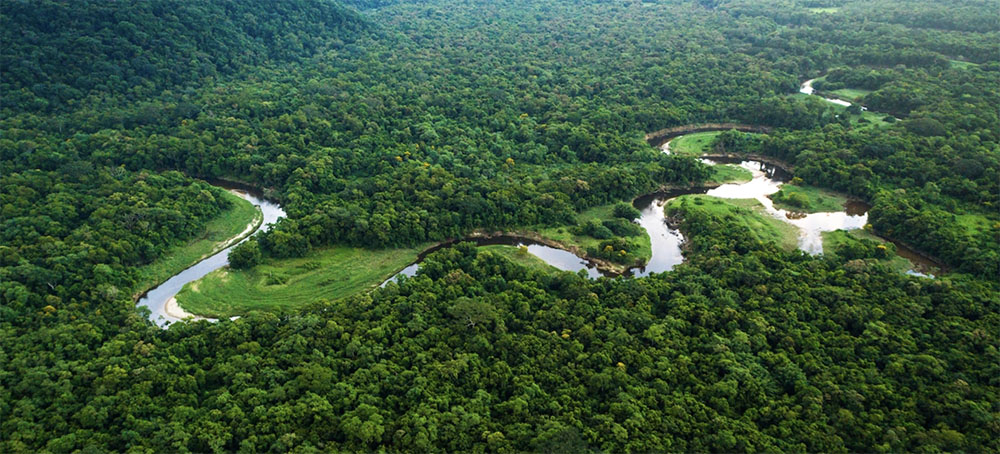 Amazon. (photo: Grist)
The Best Way to Save Forests? Legally Recognize Indigenous Lands.
Joseph Lee, Grist
Lee writes: "Recognizing and demarcating Indigenous lands leads to reduced deforestation and increased reforestation. That's according to a new study that looked at more than 100 Indigenous territories in Brazil's Atlantic Forest and found that legal recognition of those lands can have real, and measurable, impacts on centuries of deforestation."
A new report says the key to saving Brazil’s Atlantic Forest is recognizing Indigenous territory.
Recognizing and demarcating Indigenous lands leads to reduced deforestation and increased reforestation. That’s according to a new study that looked at more than 100 Indigenous territories in Brazil’s Atlantic Forest and found that legal recognition of those lands can have real, and measurable, impacts on centuries of deforestation.
“Our study contributes to an emerging body of evidence suggesting that rights-based policy for Indigenous lands can improve environmental outcomes,” said Marcelo Rauber, a co-author of the paper and researcher at the National Museum of the Federal University of Rio de Janeiro. “Known in Brazil as demarcação, the legal recognition of Indigenous peoples’ land rights provides Indigenous peoples with territorial autonomy, which support efforts to address longstanding human rights violations, land grabs, biodiversity loss and climate change.”
The Atlantic Forest stretches along Brazil’s Atlantic coast into Paraguay, Uruguay, and Argentina and once covered over 1 million square kilometers. Due to hundreds of years of deforestation, the Atlantic Forest has been reduced to less-than a tenth of its original size — a fragmented collection of forest spread across nearly 200 Indigenous territories, most of which do not have legal recognition, and urban areas, including Rio de Janeiro.
The SOS Mata Atlântica Foundation, an organization working to restore the forest, says what remains of the Atlantic is home to more than 20,000 species — 6,000 of which do not live anywhere else in the world — and contains nearly 25 percent of all threatened species in Brazil. It is also a key source of water for cities and communities nearby but has been deforested at a much higher rate than the Amazon.
Researchers found that formalized land tenure and territorial recognition was necessary for improved forest outcomes; however, most Indigenous land in Brazil lacks that legal status. Since 2012, only one territory in the Atlantic Forest’s study sample has been granted demarcation status, and while many communities have begun the process, official recognition has been slow. According to the study, that has a real impact on forest health.
For years, researchers and activists have been alarmed by former president Jair Bolsonaro’s policies, which led to a steep deterioration of environmental and Indigenous rights. Bolsonaro, who pledged not to demarcate any Indigenous land, removed environmental protections and encouraged agribusiness development that led to both murders of Indigenous land defenders and high deforestation rates. In 2020, for example, deforestation in the Atlantic Forest increased by 30 percent. “Demarcation is important, because it is not only a social issue, but also a spiritual, traditional, and cultural issue,” said Jurandir Karai Djekupe, a Guarani Mbya leader from the north of São Paulo. “It’s something that encompasses everything.”
For generations, Indigenous communities in the Atlantic Forest have sought territorial rights to fight extractive industries and land grabbers. Now, under Brazil’s new president, Luiz Inácio Lula da Silva, Indigenous communities say they may finally gain access to the legal tools necessary to protect their land, rights, and the environment. Since taking office, Lula’s administration has begun reversing many of Bolsonaro’s policies.
Rayna Benzeev, the study’s lead author, says the government must now ensure that the government agency responsible for Indigenous land, FUNAI, has the resources and political support to demarcate and protect Indigenous land throughout the country. “The new administration has an opportunity to turn this trend around by upholding the Brazilian constitution and granting Indigenous peoples with territorial autonomy and self-determination rights,” Benzeev said.
However, Jerá Poty Miriam, who is a Guarani Mbya leader from the Tenondé Porã territory, says while Indigenous communities are hopeful the new administration will keep its promises, they are committed to holding Lula accountable.
“Protecting our territory means protecting our own life because we depend on it,” said Jerá Poty Mirim. “The demarcation guarantees the continuity of those cultures that respect and protect nature.”
READ MORE
Contribute to RSN
Follow us on facebook and twitter!
Update My Monthly Donation
PO Box 2043 / Citrus Heights, CA 95611